
Choosing the right moving box dimensions often means matching a size to a type of item: a small box for books, a large box for duvets. But choosing based on contents alone is not enough. A box’s stacking strength, its total weight once filled, and the actual transport conditions (narrow staircases, storage in a damp garage, a long journey by truck) all affect how well your belongings are protected, just as much as the volume you choose.
Strength and weight limits by box size
Competitors’ guides list the available sizes. The table below compares these sizes with two factors that are rarely considered together: the maximum load they can support and the type of mechanical stress they experience during a move.
| Size | Typical dimensions | Indicative max. load | Main stress |
|---|---|---|---|
| Book box | 35 x 27,5 x 30 cm | 20 kg | Vertical compression (stacking) |
| Standard box | 55 x 35 x 30 cm | 20 kg | Side impacts (handling) |
| Large box | 60 x 40 x 40 cm | Varies by thickness | Deformation if lightweight contents are not secured properly |
| Wardrobe box | 50 x 50 x 100 cm | Limited (clothes on hangers) | Tipping in the truck |
| Reinforced box | Variable | Higher than standard | Heavy stacking, fragile items |
A 35 x 27,5 x 30 cm book box and a 55 x 35 x 30 cm standard box have the same maximum load of around 20 kg. The book box’s smaller size is therefore more than a matter of convenience: it helps prevent you from exceeding this limit with dense items such as encyclopedias or heavy dishes, which would make a standard box too heavy well before it was full.
To understand moving box dimensions, remember that size alone does not indicate stacking strength. The properties of corrugated cardboard (single-, double- or triple-wall) determine how much stacked weight it can support without collapsing.
Boxes and the actual route: stairs, damp conditions, temporary storage
Most guides recommend a box size based on the item being packed. They do not consider the route the box will actually take. A ground-floor move with direct access to the truck puts different demands on boxes than a fifth-floor move with no elevator.
Stairs and narrow passageways
A large 60 x 40 x 40 cm box filled with linens can be cumbersome in a narrow stairwell. The person carrying it has less visibility, and the box bumps against walls and corners. On stairs, a smaller, well-packed box is easier to carry than a large, half-empty one. The standard size (55 x 35 x 30 cm) is the best balance between capacity and maneuverability for this type of route.
Temporary storage and damp conditions
ISO standards specify methods for measuring the effects of humidity on paperboard. In practice, a box stored for several days in a damp garage or cellar loses some of its rigidity. A damp box can lose its load-bearing capacity and collapse under the weight of the boxes stacked on top.
If your move involves temporary storage in an unventilated space, take these precautions:
- Choose double-wall boxes, which are more resistant to ambient humidity than single-wall boxes.
- Raise boxes off the floor using a pallet or boards to prevent direct contact with a cold slab where condensation can form.
- Wrap sensitive items (paper documents, textiles, electronic devices) in waterproof protection inside the box. Do not rely on the box itself to keep water out.
Long truck journeys
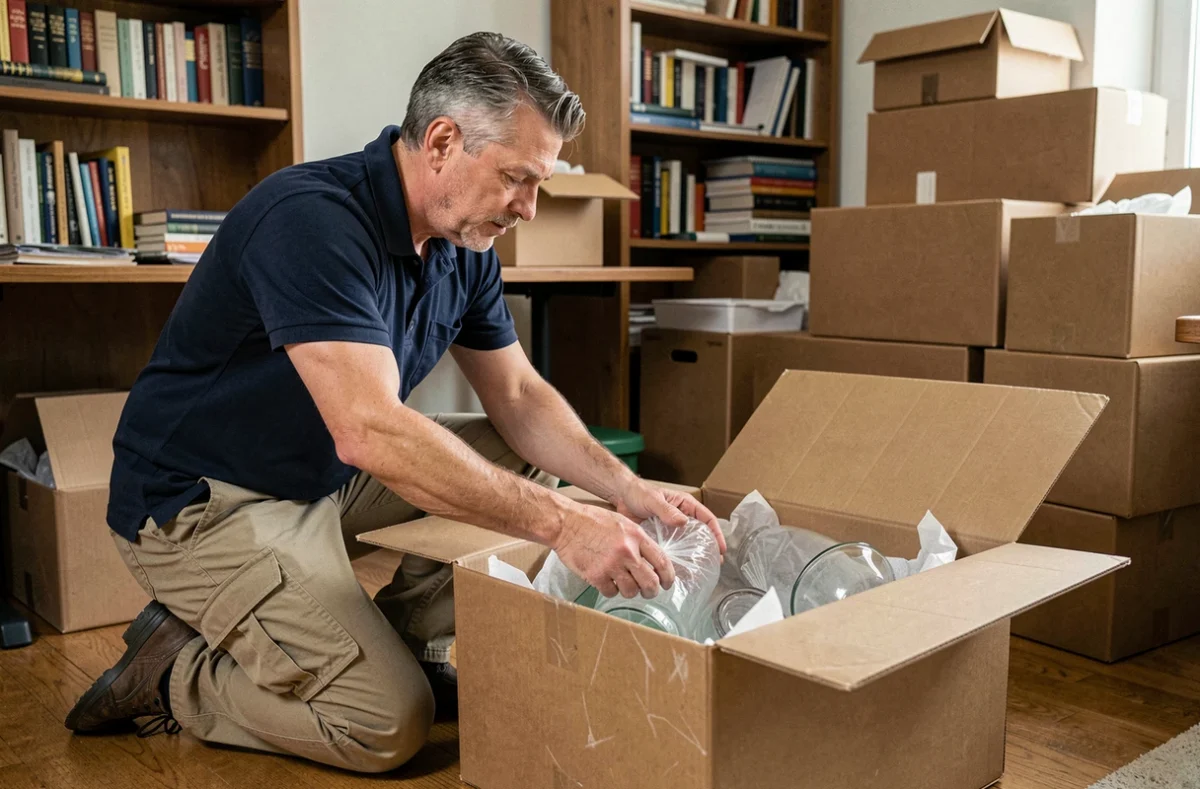
On a journey lasting several hours, boxes are exposed to continuous vibration and braking. A large, partially filled box allows its contents to slide around and knock against each other. Filling each box as much as possible and using packing material reduces internal movement far more effectively than choosing an oversized box.
Weight of a packed box: an often-overlooked safety factor
The maximum weight a box can technically support is not the same as the weight a person can safely carry. French regulations govern the handling of loads at work, and recommendations for individuals follow the same principle: limiting the weight of a packed box protects both the carrier’s back and its contents.
A standard box filled with books can easily reach its 20 kg limit. Carrying that weight up several flights of stairs increases the risk of an accident. The smaller book box naturally limits how much you can pack, keeping the weight within a manageable range.
For dense items (dishes, tools, small appliances), choose the smallest size that fits the item and its packing material. A compact, heavy box remains stable when stacked. A large, heavy box can deform at the bottom of a stack and is difficult to carry.
Reusable moving boxes: what the regulations change
In France, packaging reuse is subject to regulatory requirements, mainly for producers and producer responsibility organizations. For individuals, this has an indirect effect: boxes in good condition and standard sizes are easier to resell or give away after use.
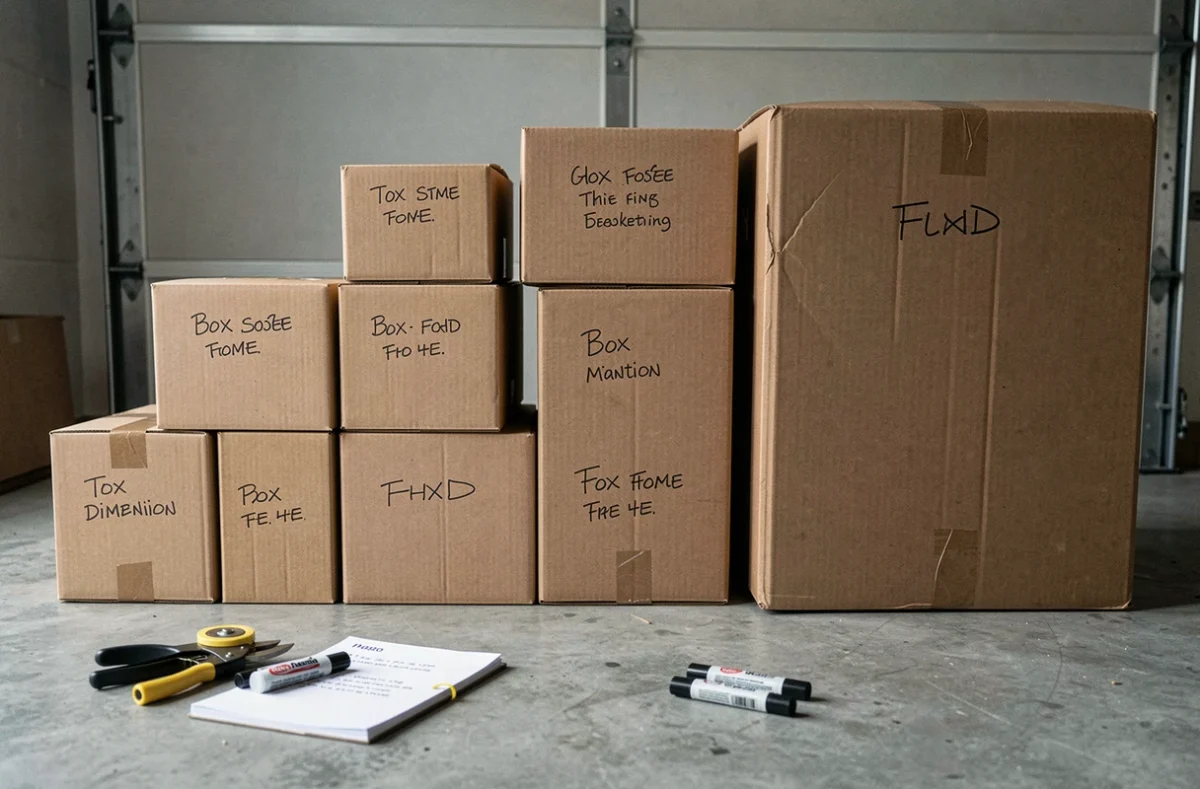
Choosing common sizes (standard, book, wardrobe) rather than unusual ones makes it easier to give boxes a second life. A well-made reinforced box that has not been deformed or exposed to moisture can withstand several uses.
- Single-wall boxes wear out after one or two moves if transport conditions are rough.
- Double-wall boxes retain their rigidity for longer and are better suited to reuse.
- A box with moisture stains or crushed edges should not be reused: its stacking strength can no longer be relied on.
When choosing moving box dimensions, it helps to consider the entire route: stairs, storage conditions, journey length, and the physical capacity of the people carrying the boxes. A box that is the right size for its contents but unsuitable for the actual moving conditions offers less protection than a smaller box that is packed and secured properly.