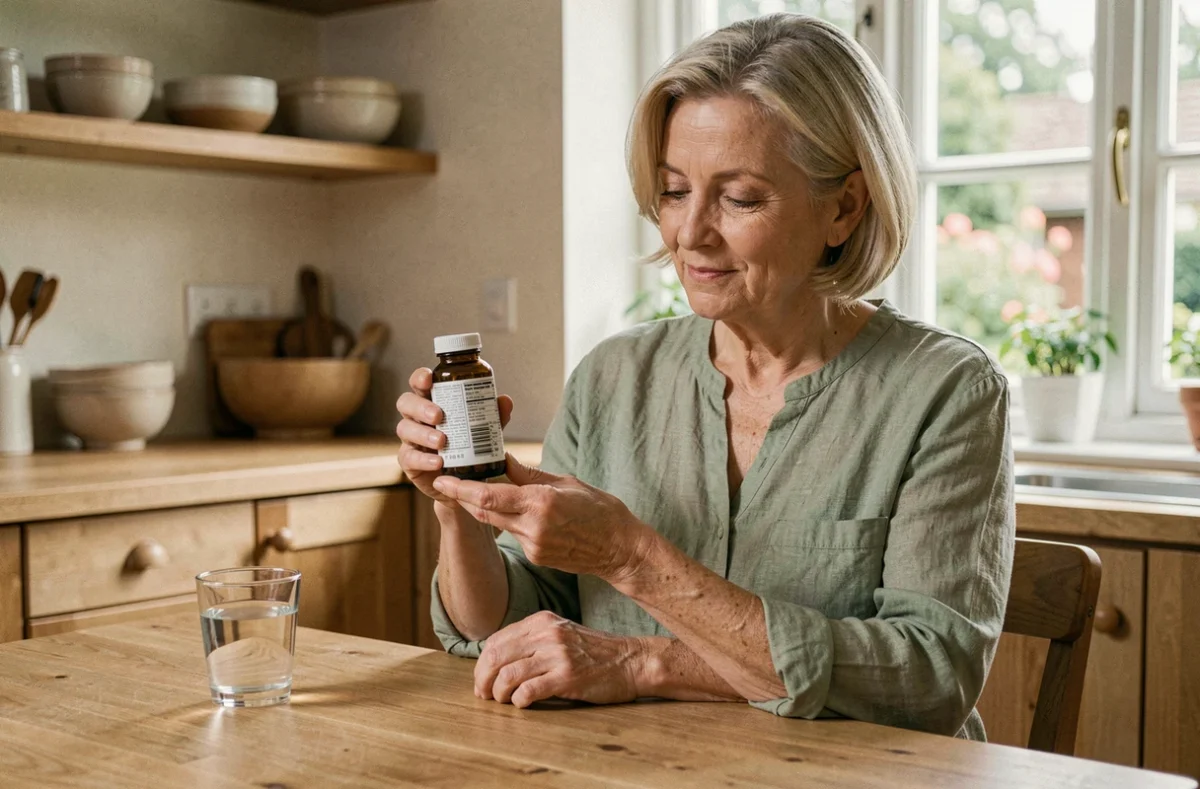
Choosing a dietary supplement for menopause depends less on a product’s popularity than on how it aligns with an individual’s hormonal profile, contraindications and the strength of the evidence for its active ingredients. The HAS recommendations of November 2025 have reshaped the hierarchy of care options, changing how any woman considering supplementation should assess her choices.
Phytoestrogens and menopause: the evidence needs perspective
Soy isoflavones and red clover remain the most common active ingredients in mainstream formulas. They work through partial affinity with beta estrogen receptors, giving them a weak modulatory effect compared with hormone replacement therapy.
What most comparisons overlook is the individual variability in isoflavone metabolism. Daidzein is converted into equol, an active metabolite, in only a fraction of the population. Without this conversion, the effect on hot flashes remains marginal.
In January 2025, Anses reiterated that supplements containing phytoestrogens may carry risks comparable to those of estrogens, particularly for women with a history of hormone-dependent cancer. This makes prior medical advice a selection criterion, not merely a precaution. Positive testimonials about isoflavones often come from women with no particular risk factors, skewing perceptions of their overall effectiveness.
Identifying the best dietary supplement for menopause therefore starts with checking whether phytoestrogens are appropriate for you and ruling out isoflavone-based formulas if your medical history calls for it.

Non-phytoestrogen active ingredients: magnesium, saffron and vitamin D
When phytoestrogens are contraindicated or ineffective, three groups of active ingredients warrant a close look at their dosages.
Magnesium and sleep during menopause
Magnesium bisglycinate is the form best tolerated by the digestive system. It may help with two common symptoms: sleep problems and irritability. The oxide form, still common in budget supplements, has significantly lower bioavailability. The form of magnesium matters just as much as the stated dosage.
Saffron and mood changes during menopause
Saffron (Crocus sativus) has clinical evidence for its effects on mood and sleep quality. Only extracts standardized for safranal and crocins have shown results in controlled trials. An extract that is not standardized offers no guarantee of its active ingredient content, even if it is taken at a high dose.
Vitamin D and bone health after menopause
The drop in estrogen levels accelerates bone density loss. Vitamin D helps the body absorb calcium, and vitamin D deficiency is common in women during perimenopause. We recommend testing serum 25-OH vitamin D before starting supplementation, so the dosage can be tailored to actual levels rather than based on a standard dose.
Dietary supplements and hormone therapy: what the HAS recommendations change
The HAS recommendations of November 2025 on care for women in perimenopause position menopausal hormone therapy (MHT) as a first-line option when vasomotor symptoms affect quality of life. This changes the role of dietary supplements: they are no longer a “natural alternative to MHT,” but a complementary option or a fallback when MHT is contraindicated.
Dietary supplements are not required to demonstrate therapeutic efficacy before being placed on the market, unlike medicines. Their composition and active ingredient content can vary from batch to batch, even within the same brand. This regulatory distinction explains why two women using the same product may report opposite results in their testimonials.
For women who cannot use MHT (for example, due to a history of breast cancer or venous thrombosis), the UK NICE guidelines, updated in 2024, mention cognitive behavioral therapy (CBT) specifically for hot flashes as a validated option. This non-drug, non-supplement approach remains little known in France.

Practical criteria for choosing a menopause supplement
Rather than listing brands, we offer a framework that can be applied to any formula.
- Check that extracts are standardized: an extract of sage or saffron with no stated active ingredient content (safranal, rosmarinic acid) makes it impossible to compare products
- Check the form of the minerals: bisglycinate or citrate for magnesium, and cholecalciferol (D3) rather than ergocalciferol (D2) for vitamin D
- Avoid formulas combining phytoestrogens with plants that have hormonal activity (hops, sage, red clover) without medical advice, especially if you have a history of hormone-dependent cancer
- Choose manufacturers that publish batch analyses (content certificates), rather than relying solely on marketing labels
The number of active ingredients in a formula is not an indicator of quality. A formula with three properly dosed, standardized ingredients is better than one with twelve underdosed ingredients. Transparency about actual dosages distinguishes serious formulas from products designed to attract buyers.
Menopause supplement testimonials: how to read them
Online reviews are subject to substantial selection bias. Women who are satisfied are more likely to post a review than those who noticed no difference. Whether someone produces equol, their concurrent treatments and their stage of menopause are almost never mentioned.
A useful testimonial specifies the symptom being targeted, how long the supplement was taken and any side effects. Without these three details, it is impossible to draw information that can be applied to your own situation.
Menopause lasts several years on average, and a supplement that eases hot flashes during perimenopause may become less relevant once menopause is established. Reviewing your supplements with a healthcare professional every six months remains the only reliable safeguard as symptoms change.