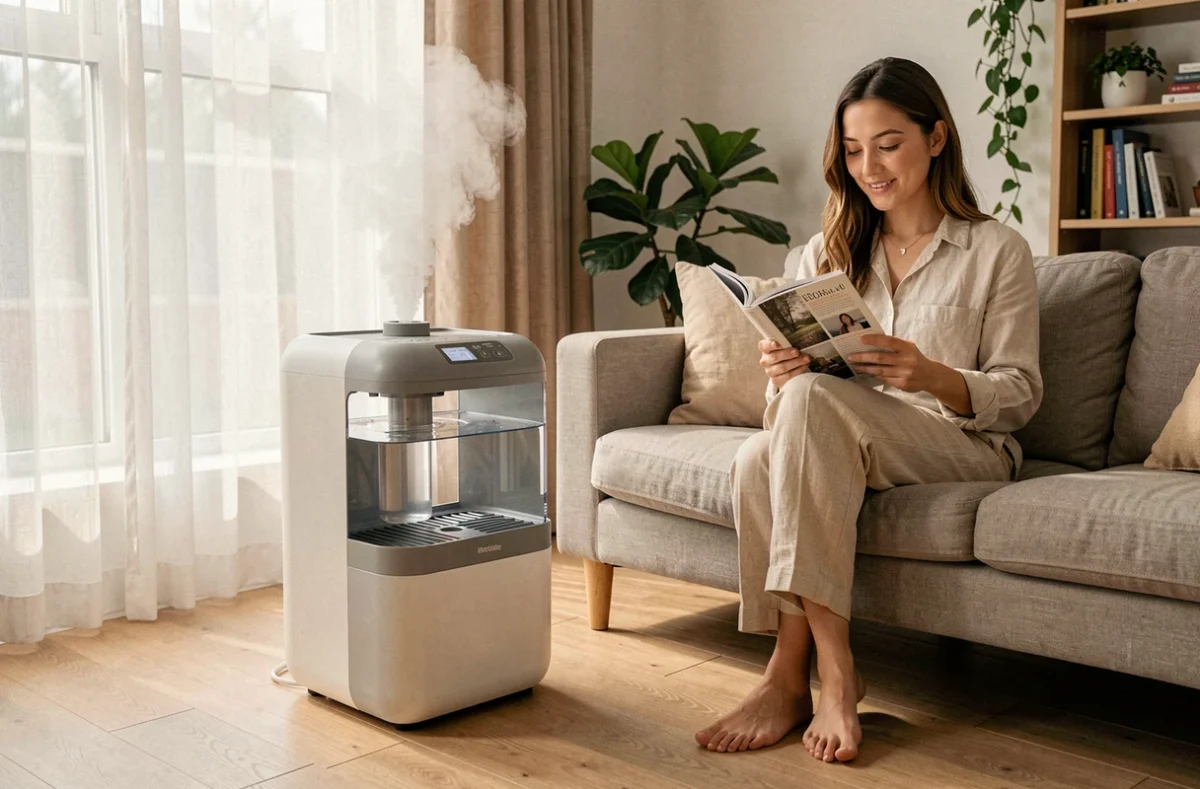
When the temperature rises in a house, the first instinct is often to look for a device capable of cooling without breaking the electricity budget. The air cooler meets this need with a radically different operation than that of an air conditioner. Understanding this mechanism helps avoid disappointments and make the most of the device on a daily basis.
The role of relative humidity in the efficiency of the cooler
Before even talking about the tank or fan, one parameter conditions everything else: the relative humidity of the room. Have you ever noticed that when you come out of a pool, the feeling of coolness is stronger in dry weather than in stormy weather? The air cooler exploits exactly this phenomenon.
The device passes a stream of air through a wet filter. The water present on this filter evaporates and absorbs heat in the process, which lowers the temperature of the blown air. When the ambient air is already saturated with humidity, evaporation slows down significantly. Beyond about 65 to 70% relative humidity, the gain in coolness becomes negligible, and the device is likely to make the atmosphere heavy and uncomfortable.
A hygrometer, even a basic one, changes the game. Rather than relying solely on the temperature displayed on a thermometer, measuring the humidity of the room allows you to decide whether to activate the cooling mode or simply use ventilation. Knowing how an air cooler works starts with this check, which is more useful than any speed setting.
In dry climates, the cooler performs at its best. In coastal areas or during stormy episodes, it’s better to stick to fan mode only.

Adiabatic evaporation: what happens inside the device
The term “adiabatic” may seem technical. In practice, it describes a thermal exchange without external heat or cold input. The device does not produce cold like an air conditioner would with a compressor and refrigerant. It simply converts the heat from the air into evaporation energy.
Here are the steps of the operating cycle:
- The water tank feeds a pump that continuously soaks a filtering medium (often made of cellulose or synthetic material)
- The fan draws in warm air from the room and forces it through this wet filter
- The water evaporates upon contact with the warm air, lowering its temperature by a few degrees before it is redistributed in the room
- The blown air contains more humidity than at the entrance, which requires regular air renewal
This last point is often overlooked. A cooler in a closed room gradually reduces its own efficiency. By adding water vapor to the air, it raises the ambient relative humidity, which slows down subsequent evaporation. Cracking a window or ensuring natural ventilation is enough to maintain the effective cycle.
Why the device does not replace an air conditioner
An air conditioner actually extracts heat from a room and expels it outside through a closed circuit of refrigerant. The cooler, on the other hand, does not move heat: it transforms it. The drop in temperature remains modest, on the order of a few degrees.
This difference explains the gap in electricity consumption. The cooler primarily uses a fan and a small pump, whereas the air conditioner mobilizes an energy-hungry compressor. The consumption of a cooler is a fraction of that of a portable air conditioner.
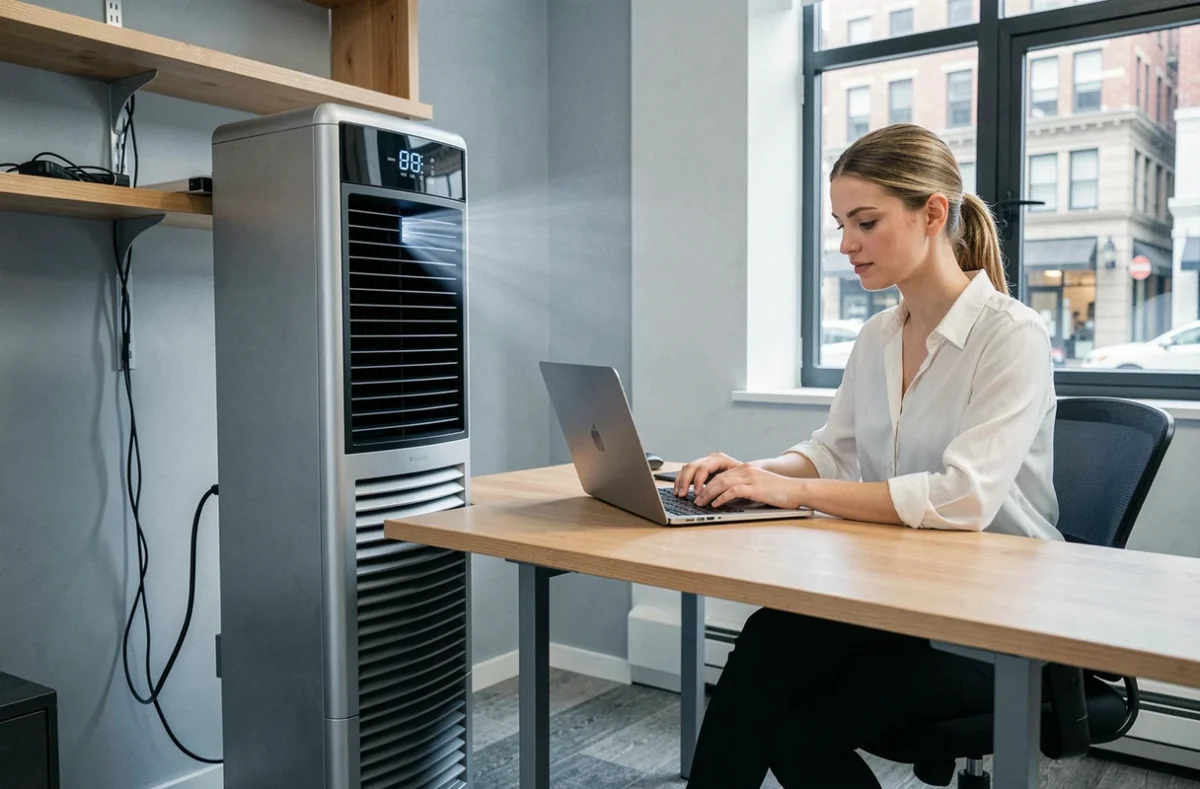
Maintenance of the air cooler: dry the filter, not just fill the tank
Most user guides emphasize the regular filling of the water tank. This is necessary but insufficient. The common mistake is simply to top up the water without ever emptying or rinsing the tank.
Stagnant water promotes the proliferation of microorganisms and mold, especially in hot weather. The filtering medium, constantly damp, becomes a breeding ground if it is never allowed to dry. Running the device in fan mode only after each use helps dry the filter and limit these risks.
Some concrete maintenance actions:
- Completely empty the tank at least once a week and rinse it with clean water
- Remove the filter every two weeks to check for deposits or odors
- Replace the filtering medium according to the manufacturer’s recommendations, usually once or twice per season of intensive use
A clogged filter reduces airflow and thus the cooling capacity. Maintenance is not just a matter of hygiene; it’s also a matter of performance.
Properly positioning your air cooler in the room
The placement of the device significantly affects the feeling of coolness. Placing the cooler near a source of cool air (cracked window, door leading to a ventilated hallway) improves air renewal and prolongs the effectiveness of the evaporation cycle.
Directing the airflow towards the area where you are located, rather than towards the center of the room, increases the sensation of coolness. The cooler acts more as localized cooling than as overall air conditioning. Expecting it to treat a large volume uniformly is essentially comparing it to a device it is not.
In a bedroom, the noise of the fan can be an issue. Some models exceed the threshold of nighttime comfort. Testing the device at a low speed before placing it at the foot of the bed avoids unpleasant surprises.
The air cooler remains a simple and economical device, provided its limits are respected: ambient air that is not too humid, a ventilated room, and maintenance focused on drying as much as on filling. With these precautions, it offers appreciable comfort during heat peaks without increasing the electricity bill.