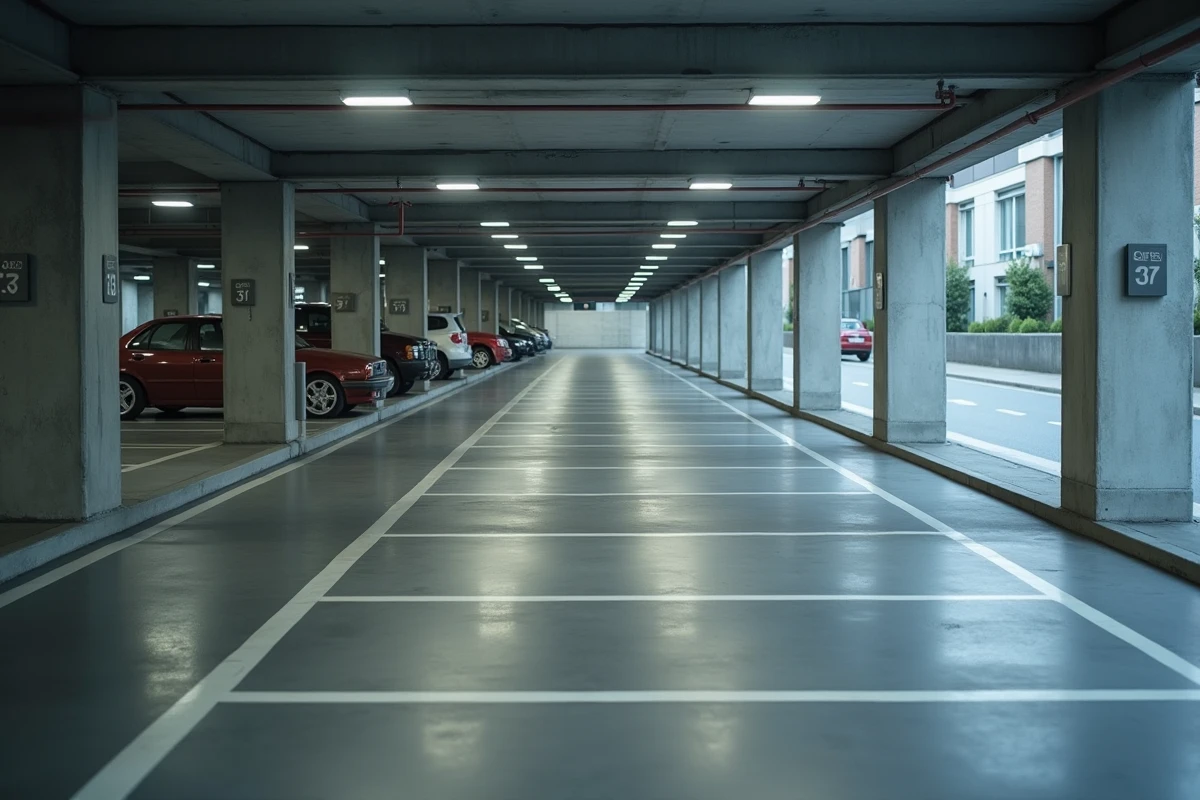
Buying a parking space in a condominium seems simple on paper. A moderate purchase price, regular rent, little management. However, the reality of the post-2024 market, marked by low emission zones and remote work, is changing the game for many investors.
LEZ and remote work: why rental values of parking spaces are stagnating in city centers
Have you noticed that city centers have been emptying of cars for a few years? Low emission zones (LEZ) restrict access for older vehicles. Remote work reduces home-to-office commutes. These two combined phenomena create a paradoxical effect on the condominium parking market.
The demand for parking spaces in city centers seems strong, as the supply remains limited. However, rents are struggling to increase in several metropolitan areas. Condominium owners who used to rent their spaces easily are now facing prolonged vacancy periods, sometimes lasting several consecutive months.
The profile of tenants is also changing. An employee who comes to the office only two or three days a week hesitates to pay a monthly subscription. They prefer occasional parking or public transport. As a result, the price of a parking space in a condominium remains high at purchase, but the actual rental yield can be disappointing.
Investors report vacancies of three to six months for spaces located in sought-after neighborhoods. The initial profitability calculation, often based on permanent occupancy, no longer holds.

Condominium fees and taxation: the hidden costs of a parking space
The purchase price is only part of the equation. Condominium fees weigh on net profitability, and many buyers underestimate them at the time of signing.
What current fees cover
In an underground parking lot attached to a condominium, fees generally include lighting for common areas, maintenance of the gate or barrier, cleaning of floors, and building insurance. These items can add up quickly.
- Lighting and ventilation in a basement represent a significant energy cost, especially in older poorly insulated buildings.
- Replacing a motorized gate or a badge system can generate exceptional funding calls voted on in general assembly.
- Management fees are shared among all condominium owners, including those who only own a parking space.
Annual fees can absorb several months of rent. For a space rented at a moderate rate in a medium-sized city, just a renovation of the access ramp or fire safety compliance can wipe out an entire year’s margin.
Taxation of rental income from a parking space
Rents received from a parking space are taxed under the property income regime. The micro-property regime, with its flat-rate deduction, is only available if your total property income remains below a certain threshold. Beyond that, the actual regime applies.
Under the actual regime, you can deduct expenses (work, loan interest, management fees). The actual regime becomes advantageous when expenses exceed the flat-rate deduction of the micro-property regime. Do the math before buying, not after.
Charging stations in condominiums: a valuation lever to be nuanced
The installation of electric charging stations in condominium parking lots is part of an ambitious national plan. According to Le Figaro, the government aims for an additional 1.7 million spaces equipped with electric charging stations in condominiums.
On paper, a space equipped with a charging station attracts more tenants and justifies a higher rent. However, the installation cost remains a barrier. According to Le Journal Auto, public aid covers part of the investment, but the remaining cost for the condominium varies depending on the building’s configuration.
A parking space equipped with a charging station does not guarantee a better yield if local demand for charging remains low. In a condominium where the majority of residents do not have electric vehicles, the collective investment may take years to pay off.
Before voting in the general assembly for a charging station project, check the actual number of electric vehicles in the residence. A quick survey among condominium owners provides reliable insight.
Concrete criteria for evaluating the price of a parking space in a condominium
The price of a space varies significantly from one building to another, even within the same city. A few criteria can help guide you.
- The location within the parking lot is as important as the address: a closed box on the first basement level is worth more than an open space on the third basement level, which is difficult to access with a wide vehicle.
- The security of the parking lot (video surveillance, secure gate, permanent lighting) reassures tenants and justifies a higher rent.
- Proximity to a train station, shopping center, or business district remains the primary factor for rental demand.
- The condominium rules may restrict renting to outsiders, limiting your pool of potential tenants.
Check the condominium rules before any purchase to know the rental and usage restrictions. Some rules prohibit storage or subletting, which reduces monetization options.
The parking market in condominiums remains accessible, with entry costs well below those of an apartment. The actual profitability depends less on the purchase price than on fees, taxation, and occupancy rate. Before signing, calculate the net yield after fees and taxes based on realistic, not optimistic, occupancy.