The free furniture market between individuals has become professionalized. Donation platforms now integrate distance filters, geolocated notifications, and built-in messaging systems. Knowing where to find free furniture is no longer limited to checking a classified ad on a local forum. Channels have multiplied, and some remain underutilized.
Professional furniture donated by companies: an unknown channel for free furniture
Individuals focus their searches on mainstream platforms. They miss out on a regular and substantial flow: bulk donations of office furniture.
Since 2023-2024, companies and administrations have organized massive donations of professional furniture during relocations or renovations. These operations are carried out through formal partnerships with local authorities and associations. In May 2026, Orange donated 200 office furniture items to associations in Saint-Dié, through the city and its municipal technical center.
This type of donation includes desks, cabinets, metal lockers, ergonomic office chairs, and sometimes meeting tables. Donated professional furniture is often more robust than mainstream furniture, designed for intensive use over several years.
To access these donations, we recommend contacting the technical service or the sustainable development department of your town hall directly. Several cities report these operations in their municipal bulletins or on their websites, but rarely on traditional donation platforms. This guide details where to find free furniture by combining traditional channels and lesser-known pathways.

Geolocation and responsiveness on furniture donation apps
The difference between retrieving a piece of furniture or watching it go often happens in less than an hour. Donation apps have strengthened their precise geolocation functions: distance filtering, notifications of new nearby donations, interactive maps of available items.
Donnons and its geolocation search
Donnons highlights an intuitive geolocation search as its central argument. The app allows users to set a search radius and be alerted as soon as a piece of furniture matching their criteria appears nearby. With nearly two million registered users, the volume of listings justifies setting up alerts rather than refreshing manually.
Geev and the notification system
Geev operates on a similar model, with an emphasis on quick exchanges. Furniture goes within the first hours after publication, making push notifications essential. We observe that users who activate alerts on at least two apps simultaneously maximize their chances.
A technical point often overlooked: ensure that location and notification permissions are enabled in your phone’s settings. A notification blocked by the operating system renders the app useless.
Municipal furniture reuse circuits: zero waste policy and donations to residents
Local authorities are gradually structuring furniture reuse circuits from their own services. School desks, technical service furniture, library equipment: this furniture is first offered to associations, and sometimes directly to residents through symbolic sales or donations.
These operations are part of the zero waste and circular economy policies that many municipalities are deploying. The information channel remains local: municipal bulletin, town hall website, notice board in the town hall or at the waste disposal site.
- Check the “circular economy” or “sustainable development” section of your municipality’s website, which sometimes indicates upcoming donation operations
- Subscribe to the municipal newsletter, often the only announcement vector for these occasional operations
- Inquire at your local resource center or recycling center, which regularly receives municipal furniture and offers it for free or at a symbolic price

Emmaüs, resource centers, and direct recovery: physical channels to find furniture
Digital platforms capture attention, but physical channels remain a major avenue. Emmaüs offers furniture at very low prices, and some communities organize free donation days to clear stock.
Resource centers and recycling centers operate on a different model: they collect, sort, and refurbish furniture before offering it. The workshop process ensures a check on the structural condition of the furniture, which reduces the risk of retrieving an unusable piece.
A rarely practiced reflex: visit these structures directly during the week, outside of weekends. New arrivals are shelved throughout the week, and the most interesting pieces go before Saturday. Some resource centers also accept to notify you if a specific type of furniture comes into stock.
Bulky waste and illegal dumping: legal framework
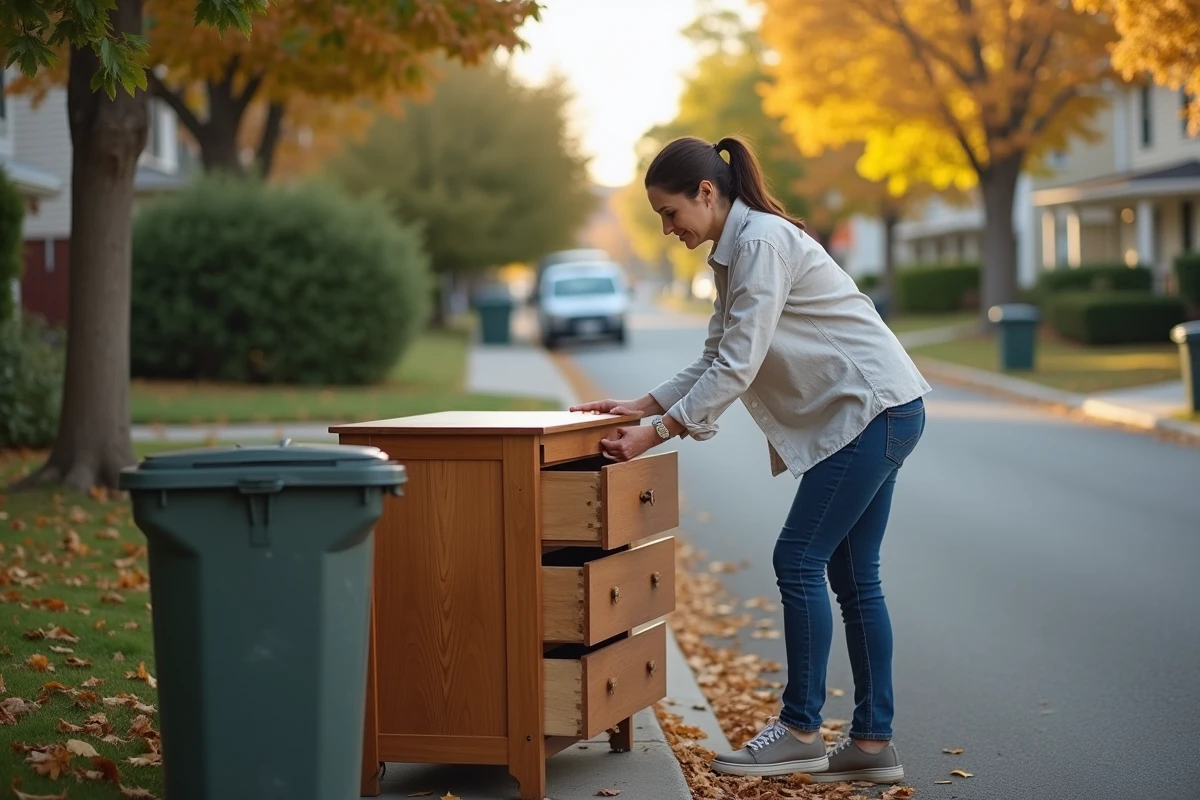
Retrieving a piece of furniture placed on the sidewalk before the bulky waste collection is a common practice. From a regulatory standpoint, an item left for bulky waste remains the property of the depositor until it is collected. In practice, recovery is tolerated in most municipalities, but check local rules to avoid any confusion with illegal dumping.
- Check your municipality’s bulky waste collection calendar to identify the dates and neighborhoods concerned
- Prefer solid wood furniture, which withstands outdoor exposure better than particle board
- Systematically inspect drawers and the back of the furniture for any signs of moisture or pests
The proliferation of digital and physical channels provides access to a considerable volume of free furniture. The key remains active monitoring: alerts set on apps, following municipal listings, regular visits to resource centers. Donations of professional furniture from companies and local authorities represent a resource still largely underutilized by individuals.